

Why RISC-V Is Shifting Modern Custom Silicon and Microcontroller Design
The Silicon Paradigm Shift Beyond Proprietary ISAs
The microcontroller and custom ASIC landscape is moving through a strategic shift. For decades, many design teams selected a processor core together with a mature proprietary instruction set, established development tools, and a predictable vendor support model. That approach remains commercially strong, particularly when delivery schedules are tight. However, the growing availability of royalty-free architectures is changing how architects evaluate control, differentiation, and long-term silicon economics. RISC-V architecture provides the formal foundation for this change, offering an open instruction set that can be implemented by multiple vendors and adapted to highly specialized products.
RISC-V does not make processor development simple by default. It removes recurring ISA licensing royalties and gives engineering teams greater authority over the hardware interface, but those advantages can expose new costs in verification, software enablement, documentation, and maintenance. The 2026 design horizon is therefore not a choice between openness and proprietary technology in the abstract. It is a practical question of whether architectural freedom creates enough product value to justify the additional engineering responsibility before tape-out, during bring-up, and throughout the product lifetime.
Modular Architecture and Custom Instruction Extensions
RISC-V begins with deliberately small base instruction sets. RV32I and RV64I establish the essential integer operations, register model, and memory behavior needed to build a processor, while leaving optional capabilities outside the minimum implementation. For an ultra-low-power microcontroller, that separation can be valuable. A design team can avoid integrating floating-point, vector, or other execution hardware when the application only needs deterministic control, sensor processing, communication stacks, and modest real-time workloads. A smaller implementation may reduce area and switching activity, although the final result still depends on the pipeline, memory system, debug logic, bus fabric, and peripheral architecture.
Ratified extensions allow the same architectural family to scale toward more demanding workloads. The M extension supports integer multiplication and division, A provides atomic operations, F and D address single- and double-precision floating-point capabilities, C enables compressed instructions, and Vector supports scalable data-parallel execution. The official RISC-V ratified specifications also cover privileged behavior, profiles, debugging, trace, platform software, and application enablement. This broader specification structure matters because commercial interoperability depends on more than the base opcode encoding. Boot behavior, ABI compatibility, interrupt handling, debug access, and operating-system expectations must also be defined and tested.
Custom instructions are where RISC-V can deliver its clearest differentiation. A cryptographic accelerator might expose instructions for finite-field operations, an audio device could optimize filters and transforms, and an edge-AI controller might add operations suited to matrix multiplication or quantized data movement. The hardware-software boundary must be designed carefully. A custom opcode can reduce instruction count and memory traffic, but it also creates compiler, assembler, debugger, simulator, and verification obligations. The engineering value is highest when the operation is frequent, computationally expensive, and stable across product generations.
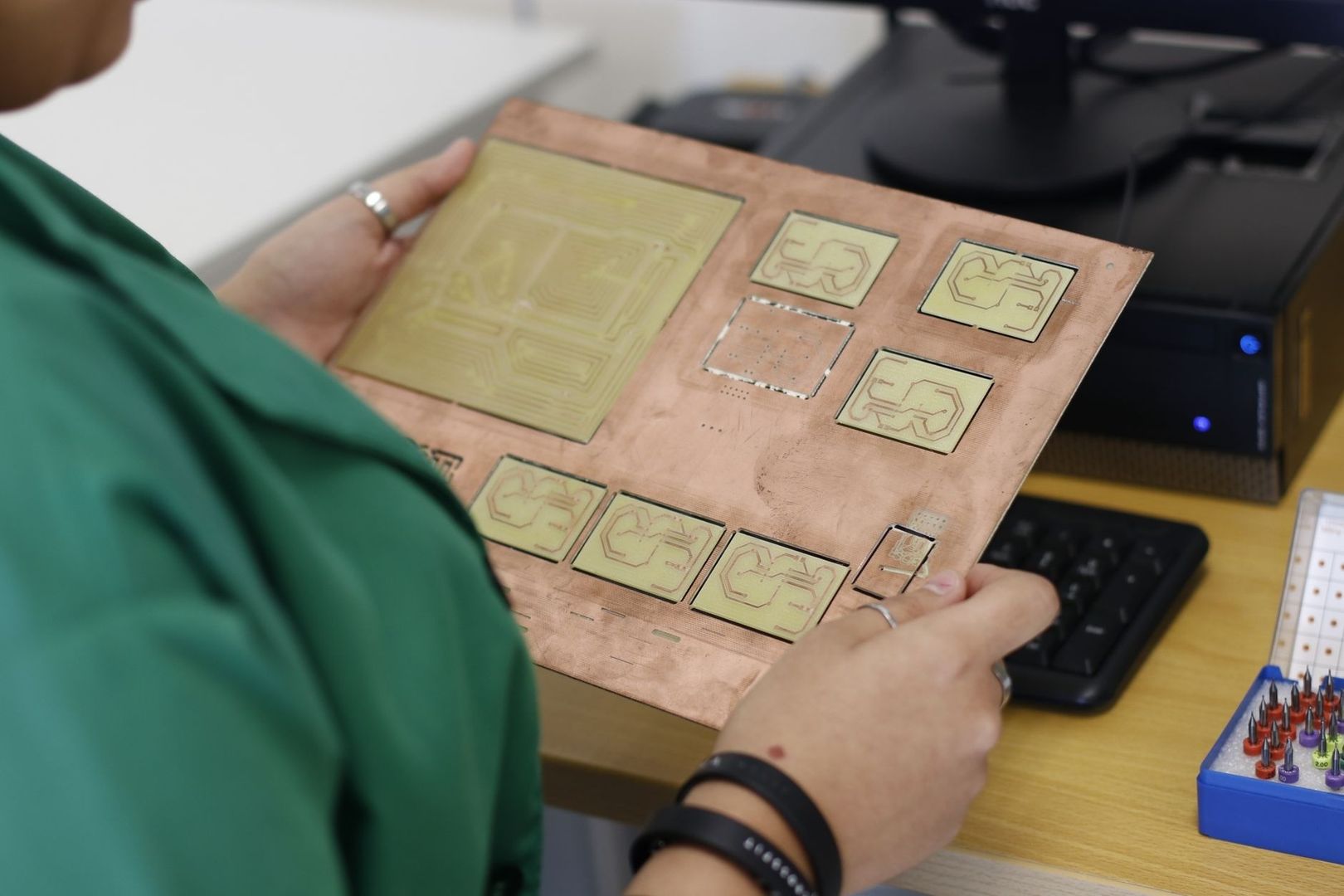
- Minimal control cores: RV32I can support compact, low-power control paths when application requirements are limited.
- Performance scaling: Ratified extensions allow floating-point, atomic, compressed, and vector capabilities to be added according to workload needs.
- Domain acceleration: Custom instructions can target cryptography, DSP kernels, compression, image processing, or edge inference.
- Software consequences: Every non-standard extension requires a documented programming model and a maintained software path.
Architectural Trade-Offs in Commercial Silicon Development
The commercial comparison is not simply royalty-free RISC-V versus licensed Arm. The relevant variables include core microarchitecture control, access to mature peripheral software, vendor lock-in, internal verification capability, silicon area, and schedule risk. Arm Cortex-M profiles provide a widely recognized development model, established CMSIS support, extensive board support packages, and a large pool of engineers familiar with the ecosystem. That maturity can shorten integration time when the product uses conventional peripherals and does not require unusual execution behavior.
RISC-V can reduce recurring royalty exposure and support a broader range of implementation choices. Yet an apparently lower core cost may be offset by internal work on integration, compliance testing, compiler support, security review, and technical support. The correct comparison is therefore total engineering effort rather than the price of an individual IP block.
| Decision factor | RISC-V implementation | Arm Cortex-M implementation | Practical implication |
|---|---|---|---|
| Licensing economics | No recurring ISA royalty for the open standard, although core IP and support may still carry fees | Established licensing and commercial IP costs | RISC-V can be attractive at high volume, but integration labor must be included |
| Microarchitecture control | Broad freedom to select or develop pipelines, extensions, and implementation features | More constrained by licensed core configurations and vendor offerings | Custom control favors RISC-V when differentiation directly affects product value |
| Software maturity | Strong and improving ecosystem, with variability among cores and extensions | Broad BSP, RTOS, middleware, and debug support | Standard peripherals and short schedules often favor the established path |
| Silicon optimization | Fine-grained selection of extensions can avoid unnecessary hardware | Predefined core options may be easier to integrate but less specialized | Area and power gains depend on disciplined architectural analysis |
| Vendor dependence | Open ISA reduces dependence, but proprietary extensions can recreate it | Dependence on Arm licensing and selected semiconductor vendors | Portability requires documented profiles and restrained customization |
The Toolchain Burden and Verification Realities
The software stack is often the first hidden cost encountered by a RISC-V team. A standard core can use mainstream GCC, LLVM, GDB, and established RTOS ports, but a custom instruction set changes that assumption. The compiler must know when an instruction is profitable, the assembler must encode it correctly, the linker and ABI must preserve compatibility, and the debugger must display meaningful state. Simulation and profiling tools must also model the instruction accurately. If the project maintains forks of GCC or LLVM, those branches become long-lived engineering assets that require security updates, upstream synchronization, regression testing, and release management.
Hardware-software co-verification must cover both architectural correctness and system behavior. A serious production flow normally combines UVM-based environments, directed instruction tests, constrained-random testing, formal property verification, and instruction-accurate simulation. The reference model must agree with RTL on exceptions, privilege transitions, memory ordering, interrupts, custom instruction corner cases, and reset behavior. A passing compiler test suite does not demonstrate that an implementation handles an illegal opcode, a misaligned access, or an asynchronous interrupt correctly under pipeline pressure.
This burden becomes more demanding in safety-critical and regulated products. Traceability must connect system requirements to architecture, RTL, firmware behavior, verification evidence, and release artifacts. Open-source tools can participate in that flow, but the product organization remains responsible for qualifying the tools and demonstrating that their use is controlled. The methodology described in Medical Devices with Embedded Sensor Systems illustrates why iterative prototyping, risk management, software lifecycle controls, and regulatory planning must be integrated early rather than added after the technical design is complete.
- Freeze the base ISA, profiles, ABI, and custom extension specification before software development scales.
- Maintain a golden architectural model that can execute the complete instruction set independently of RTL.
- Use formal properties for privilege, memory, exception, and interface behavior where simulation coverage is difficult to prove.
- Track compiler, debugger, simulator, and RTOS versions as controlled product dependencies.
- Define evidence requirements early for safety, cybersecurity, quality, and regulatory reviews.
Silicon Bring-Up and Ecosystem Maturity in Production
Post-tapeout validation exposes weaknesses that are easy to overlook in an architectural discussion. The processor must be accessible through JTAG, debug registers must behave as documented, trace must provide useful visibility, and reset and boot flows must work with real clocks, memories, and power domains. RTOS support introduces another layer of validation. FreeRTOS and Zephyr may run successfully in simulation while still revealing issues on silicon involving timer interrupts, interrupt priorities, atomic operations, cache behavior, or linker assumptions. A bring-up plan must therefore connect hardware observation with firmware diagnostics from the first boot image.
Commercial IP providers generally offer integration documentation, validation collateral, reference platforms, and support contracts. Open-source cores can reduce licensing costs and permit deeper inspection, but the buyer or internal team assumes more responsibility for assessing quality, maintenance, security, and compatibility. Neither model eliminates risk. The relevant question is whether the organization has the technical capacity to own that risk and whether the resulting control produces measurable product differentiation.
Development platforms should be established before wafer fabrication. FPGA prototypes, emulators, instruction-set simulators, and virtual platforms allow firmware teams to begin driver and RTOS work while RTL is still changing. Educational and engineering tools such as the browser-based BRISC-V emulator demonstrate how a simple, installation-free model can make instruction behavior accessible, although production teams require substantially more complete models and debug interfaces. Commercial evaluation-board practices also show the value of modular boards, expansion interfaces, prebuilt software images, and repeatable programming tools.
- Specify the platform: Document the ISA profile, memory map, interrupt model, debug interface, boot sequence, ABI, and every custom instruction.
- Build an executable reference: Make the model available to firmware, verification, and application teams before RTL stabilization.
- Prototype on FPGA: Validate buses, peripherals, clocking assumptions, boot software, RTOS behavior, and debug access on a repeatable platform.
- Exercise production workflows: Test programming, crash capture, trace collection, field diagnostics, and firmware update procedures before tape-out.
- Prepare first-silicon experiments: Define minimal boot images, boundary-scan actions, JTAG scripts, observability hooks, and fallback recovery paths.
Architecting the Optimal Path for Next-Generation ASICs
Choose standard Arm IP when the product is built around conventional microcontroller functions, the schedule is aggressive, software reuse is more valuable than ISA differentiation, and the organization lacks capacity for long-term toolchain ownership. A mature Cortex-M ecosystem can be the lower-risk option even when its licensing cost is visible. Choose RISC-V when custom acceleration, extreme power or area optimization, strategic independence, or high-volume economics can justify the additional verification and software effort. A hybrid strategy is also possible, using a standard RISC-V profile for portability while limiting custom instructions to a small, stable acceleration interface.
Total cost of ownership must include more than core acquisition. Model compiler maintenance, simulator development, verification staffing, FPGA platforms, certification evidence, debugging infrastructure, software porting, security response, and schedule impact. A royalty saving has little value if a delayed tape-out misses a product window or if every future firmware release depends on an under-maintained toolchain.
- Define the workload and quantify which kernels genuinely benefit from custom execution.
- Compare complete five-year engineering costs, not just licensing or royalty figures.
- Set a maximum extension budget and require measurable performance, power, or area benefits.
- Verify the debug, trace, RTOS, compiler, and production-programming paths before tape-out.
- Assign clear ownership for ISA documentation, toolchain releases, security fixes, and future compatibility.
- Use profiles and standard interfaces wherever possible to preserve portability across cores and vendors.
RISC-V is shifting custom silicon design because it changes who controls the processor interface and how deeply that interface can be adapted to the product. That freedom is strategically important, but it is not free engineering. The strongest programs treat the ISA, RTL, compiler, verification environment, and lifecycle support as one integrated product. With disciplined scope and early validation, RISC-V can provide durable silicon differentiation. Without that discipline, the same flexibility can become a schedule, maintenance, and reliability liability.