
Ceramic vs Polymer Electrolytes: Solving the Scaled Assembly Bottleneck in Solid-State Cells
The Gigawatt-Hour Dilemma in Solid-State Battery Commercialization
Solid-state batteries are often presented as an electrochemical upgrade to conventional lithium-ion cells, but the commercial challenge is more mechanical than conceptual. A laboratory cell can tolerate careful material placement, slow assembly, manually controlled pressure, and extensive inspection. A gigawatt-hour factory cannot. It must convert brittle or viscoelastic materials into uniform multilayer structures at high speed while controlling thickness, alignment, porosity, interfacial resistance, contamination, and yield.
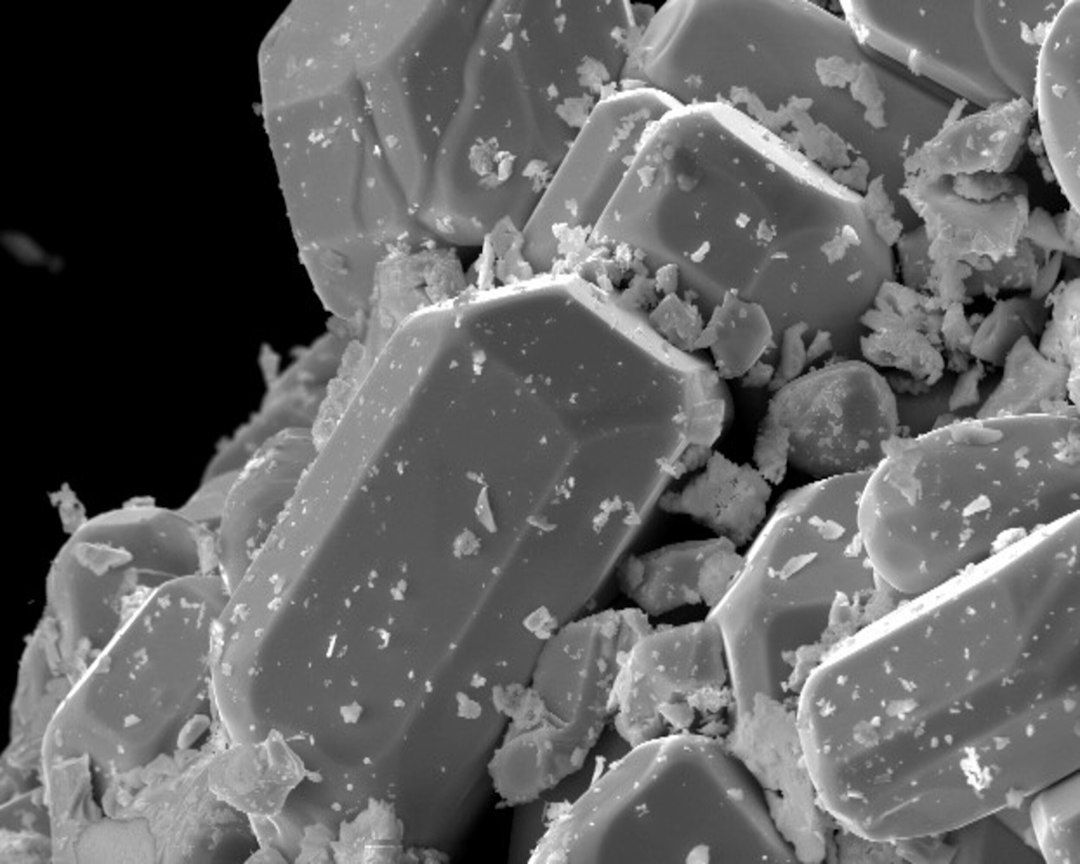
The phrase “solid-state battery” also hides several materially different manufacturing problems. Ceramic electrolytes, including oxide and sulfide families, behave very differently from solid polymer networks such as polyethylene oxide, or PEO, and polyvinylidene fluoride, or PVDF. Ceramics can provide strong ionic transport and high mechanical stiffness, but they are vulnerable to fracture, surface roughness, and poor conformal contact. Polymers are easier to coat, laminate, and deform into intimate contact, yet their conductivity often depends strongly on temperature and their modulus may be insufficient to control lithium-metal interfaces.
The central engineering task is therefore not simply to maximize ionic conductivity. It is to reconcile ionic throughput with the mechanical compliance required by continuous assembly and cycling. A useful baseline is provided by this solid-state battery overview, which shows why replacing a liquid electrolyte changes both the electrochemical pathway and the physical interfaces between electrodes, separators, and current collectors. This article focuses on ceramic versus solid polymer architectures, the pressure and interface requirements that follow from each, and the production-tooling adaptations needed to move from pilot lines toward reliable high-volume manufacturing.
- Ceramics offer high stiffness and, in some chemistries, strong room-temperature conductivity, but require careful fracture and contact management.
- Polymers offer elastic conformity and strong compatibility with roll-to-roll processing, but may need thermal activation or composite reinforcement.
- Hybrid membranes can moderate both limitations, provided inorganic loading, binder distribution, and pressure requirements remain manufacturable.
Fundamental Trade-Offs in Ceramic and Polymer Chemistries
Oxide and sulfide ceramics generally provide a more rigid ionic pathway than a conventional polymer electrolyte. Oxide systems are chemically and atmospherically robust relative to sulfides, but they often require high-temperature processing and can be difficult to densify without damaging adjacent layers. Sulfides can offer high ionic conductivity and comparatively favorable low-temperature consolidation, yet their moisture sensitivity and chemical interaction with solvents create major factory-control requirements. Polymer systems, by contrast, can be cast, calendered, laminated, and stretched with equipment similar to that used for lithium-ion separator and electrode production.
PEO-based electrolytes illustrate the conductivity challenge. Segmental polymer motion assists ion transport, so conductivity often improves substantially with temperature, while room-temperature performance can be inadequate for high-power automotive duty unless the formulation is modified. PVDF-based systems can provide useful mechanical and processing characteristics, but the polymer matrix alone does not automatically deliver ceramic-like ionic throughput. The correct comparison is therefore application-specific rather than chemistry-specific. A polymer may be the better choice where low-pressure conformity and fast web handling dominate, while a ceramic may be preferable where compactness, high current density, and mechanical suppression of unwanted lithium growth are decisive.
| Engineering attribute | Ceramic electrolyte | Solid polymer electrolyte |
|---|---|---|
| Room-temperature ionic transport | Often high for optimized sulfide and selected oxide systems | Often lower and strongly formulation- and temperature-dependent |
| Mechanical behavior | Rigid, high shear modulus, low strain tolerance | Compliant, deformable, and capable of conformal contact |
| Thermal activation | May require sintering or elevated-temperature consolidation during production | May require elevated operating temperature to improve ion mobility |
| Atmospheric sensitivity | Especially significant for sulfides exposed to moisture | Generally easier to handle, depending on salt, solvent, and additives |
| Interface impedance | Can rise sharply from roughness, voids, cracking, or chemical reaction | Can benefit from wetting and deformation, but may suffer from limited conductivity |
| Process compatibility | Requires specialized powder, densification, or thin-film handling | More naturally compatible with coating, calendaring, and lamination |
Interfacial Contact and Stack Pressure Requirements in Continuous Cycling
The most important interface problem appears during lithium stripping and plating. When lithium is removed from one region faster than neighboring areas can mechanically follow, voids can form at the lithium-electrolyte boundary. During subsequent plating, current concentrates around remaining contact points, increasing local current density and the risk of nonuniform deposition. A rigid ceramic separator may resist some modes of deformation, but it cannot automatically eliminate void formation. Cracks, pores, rough surfaces, and local variations in thickness can become preferred pathways for damage or lithium penetration.
Polymer electrolytes respond differently. Their elastic deformation can preserve contact as the lithium electrode changes shape, potentially reducing isolated voids. However, a soft polymer may not provide sufficient resistance to localized growth or may deform excessively under pressure. The result is a coupled electrochemical and mechanical control problem. Pressure must be high enough to maintain contact, but not so high that it creates excessive tooling loads, accelerates creep, or imposes a severe pack-level mass penalty.
- Ceramic fixtures may require approximately 5 to 15 MPa of stack pressure in demanding test configurations, depending on cell design, surface quality, temperature, and cycling protocol.
- Polymer-based interfaces can often operate with substantially lower external pressure, sometimes below 1 MPa, because the electrolyte conforms to adjacent surfaces.
- External clamping adds structural mass, occupies volume, complicates thermal integration, and can reduce the practical energy-density advantage of a thin solid electrolyte.
- Composite architectures seek to combine an inorganic transport network with a polymer phase that fills surface defects and accommodates strain.
Hybrid matrices are attractive because they shift part of the contact problem from external hardware into the electrolyte itself. The inorganic phase can raise conductivity and stiffness, while the polymer phase supplies deformation and crack-bridging behavior. The difficulty is that increasing inorganic loading can make mixing, coating, calendering, and lamination more difficult. Recent research on inorganic content in solventless hybrid processing is relevant because it addresses the practical boundary between useful reinforcement and a powder-rich material that demands unmanageable compaction or clamp loads. At pack level, a material that performs well in a laboratory pressure fixture is not automatically a viable cell component.
Equipment Reconfiguration for High-Throughput Roll-to-Roll Lines
Polymer-rich architectures have a clear manufacturing advantage because they can often use familiar web-processing principles. Slurry coating, slot-die deposition, drying, tension control, calendering, edge trimming, and nip lamination are established operations in lithium-ion production. The equipment still requires modification for electrolyte-specific rheology, moisture control, and defect tolerances, but the underlying machine architecture is recognizable. Web tension becomes particularly important when a soft membrane must be stretched enough for transport without inducing permanent deformation or thickness variation.
Sulfide electrolytes create a more demanding environment. Moisture exposure can cause chemical degradation and may generate hazardous byproducts, so powder handling, mixing, coating, storage, and inspection require tightly controlled dry-room conditions. Conventional NMP-based processing is also problematic because sulfide electrolytes can react with the solvent, reducing ionic conductivity and increasing interfacial resistance. A line designed for liquid-based electrode slurries may therefore need new material-transfer systems, sealed enclosures, dry-powder feeders, and solvent-free forming equipment.
Oxide ceramics present a different set of constraints. Thin films may be brittle during unwinding, slitting, stacking, and lamination, especially when the web contains edge defects or local density variation. If sintering is required, the process adds high-temperature furnaces, thermal profiling, shrinkage compensation, and dimensional-control challenges. The capital decision is consequently a comparison between retrofitting existing lithium-ion assets and constructing dedicated ceramic assembly bays. Retrofitting may lower initial capital expenditure and accelerate learning, while dedicated equipment may be necessary when atmosphere, temperature, and powder-containment requirements exceed the capability of an existing line.
- Map every material transition, from powder feed to finished separator, before selecting equipment.
- Measure web tension, elongation, edge quality, and thickness uniformity under realistic line speeds rather than laboratory handling speeds.
- Separate moisture-sensitive powder operations from downstream assembly areas wherever contamination control requires it.
- Design inspection around defects that drive interface resistance, not only visible pinholes or gross thickness failures.
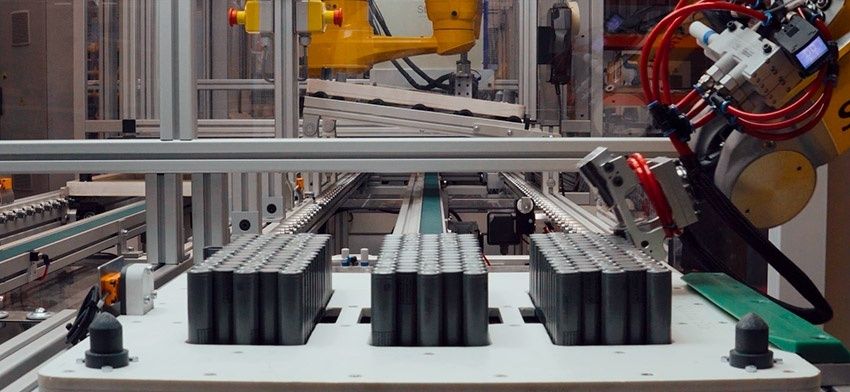
The development of highly automated pilot systems demonstrates the direction of travel. QuantumScape announced its Eagle Line in February 2026 as a pilot-production system intended to produce cells for customer sampling, testing, demonstrations, and product integration. The company describes the line, including its Cobra separator process, as a production blueprint that could support future licensing partners. That milestone does not remove scale-up risk, and the company explicitly characterizes commercialization and ramp-up statements as forward-looking, but it illustrates why solid-state manufacturing requires integrated automation rather than a simple substitution of one separator material for another.
Process Adaptations for Dry Powder and Solvent-Free Electrode Integration
Dry processing is particularly important when solvent exposure can damage a sulfide electrolyte. The basic route uses mechanical energy to convert a powder blend into a coherent, self-supporting film. PTFE is valuable because it can fibrillize under shear, creating a network that binds active material, conductive additive, and electrolyte particles without requiring a liquid carrier. The result can be calendered and laminated to a current collector, potentially enabling thicker and denser electrodes while eliminating solvent recovery infrastructure.
- Meter the powders so that active material, conductive phase, electrolyte, and binder enter the mixer within controlled composition and moisture limits.
- Apply mechanical shear to stretch PTFE into fibrils rather than allowing it to remain as isolated binder particles.
- Disperse the fibrillar network through the powder bed while limiting agglomeration and excessive localized heating.
- Form a preliminary film by controlled compaction, establishing enough cohesion for transfer without sealing the pores needed for ion transport.
- Calender the web to set thickness, density, and surface uniformity while monitoring roll force and temperature.
- L laminate the film to the current collector or adjacent electrolyte layer with controlled pressure, alignment, and edge registration.
The process window is narrow. Excessive shear can alter binder morphology or damage sensitive particles, while insufficient shear produces weak films, agglomerates, and unstable edges. Binder crystallinity and fibrillation state must be controlled because they influence both mechanical strength and ionic pathways. Calendar pressure that improves density may simultaneously reduce porosity or force electrolyte particles away from critical interfaces. These interactions make in-line measurement essential, including thickness mapping, mass-per-area control, density distribution, web tension, surface resistance, and defect inspection.
Continuous pilot lines should also evaluate lamination as a dynamic operation rather than a static press step. The relevant variables include powder feed stability, line speed, nip pressure, roll temperature, dwell time, film temperature, and the relative compliance of the current collector and electrolyte web. Edge irregularity requires particular attention because it can cause alignment loss, local pressure concentration, and shorting risk during multilayer assembly. The process objective is not merely a visually uniform film. It is a film with repeatable ionic and mechanical properties across the full web width.
For process engineers, the practical control plan should connect every measurable variable to a cell-level failure mode. Thickness nonuniformity can create current-density gradients. Low density can increase void formation and interface resistance. Excessive compaction can suppress ion transport. Poor collector adhesion can cause delamination during winding or stacking. Solvent-free processing removes one major chemical risk, but it does not remove the need for disciplined interface engineering, geometry control, and statistical process control.
Engineering the Hybrid Road to Scalable Solid-State Manufacturing
Neither extreme offers an uncompromised path to gigawatt-hour production. A pure ceramic design can deliver attractive transport and stiffness, but brittle handling, surface contact, thermal processing, and external pressure can undermine yield and pack-level efficiency. A low-conductivity polymer can run through familiar coating and lamination equipment, yet its temperature dependence and limited mechanical strength may constrain power, fast charging, or lithium-metal stability. The commercial decision is therefore a systems decision spanning chemistry, equipment, pressure, thermal management, and quality control.
In the medium term, inorganic-in-polymer composite membranes are a practical route because they address the two dominant failure modes at once. The inorganic component can improve ionic transport and mechanical resistance, while the polymer component supports conformal contact and lower-pressure assembly. Success depends on maintaining a controlled inorganic fraction, uniform dispersion, stable interfaces, and a processing window compatible with continuous manufacturing. For manufacturing leaders, the roadmap should be explicit:
- Use existing roll-to-roll assets where polymer compliance and solvent-free retrofit requirements permit.
- Reserve specialized capital for dry-room infrastructure, powder containment, ceramic densification, and high-resolution inspection.
- Qualify pressure requirements at the cell and module level, including clamp mass and thermal expansion effects.
- Optimize for yield and interface resistance, not ionic conductivity alone.
- Use pilot lines to establish transferable process windows before committing to full gigawatt-hour capacity.
The winning architecture will be the one that converts electrochemical potential into repeatable, inspectable, and serviceable manufacturing output. That requires treating the electrolyte as both an ion-conducting material and a structural component of the production system. Ceramic throughput, polymer compliance, dry processing, pressure control, and automated inspection must be designed together. Solid-state commercialization will advance when the factory can produce interfaces that remain uniform under cycling without relying on laboratory-level handling or excessive external force.